

How to Choose the Perfect Size Dining Table for Your Space


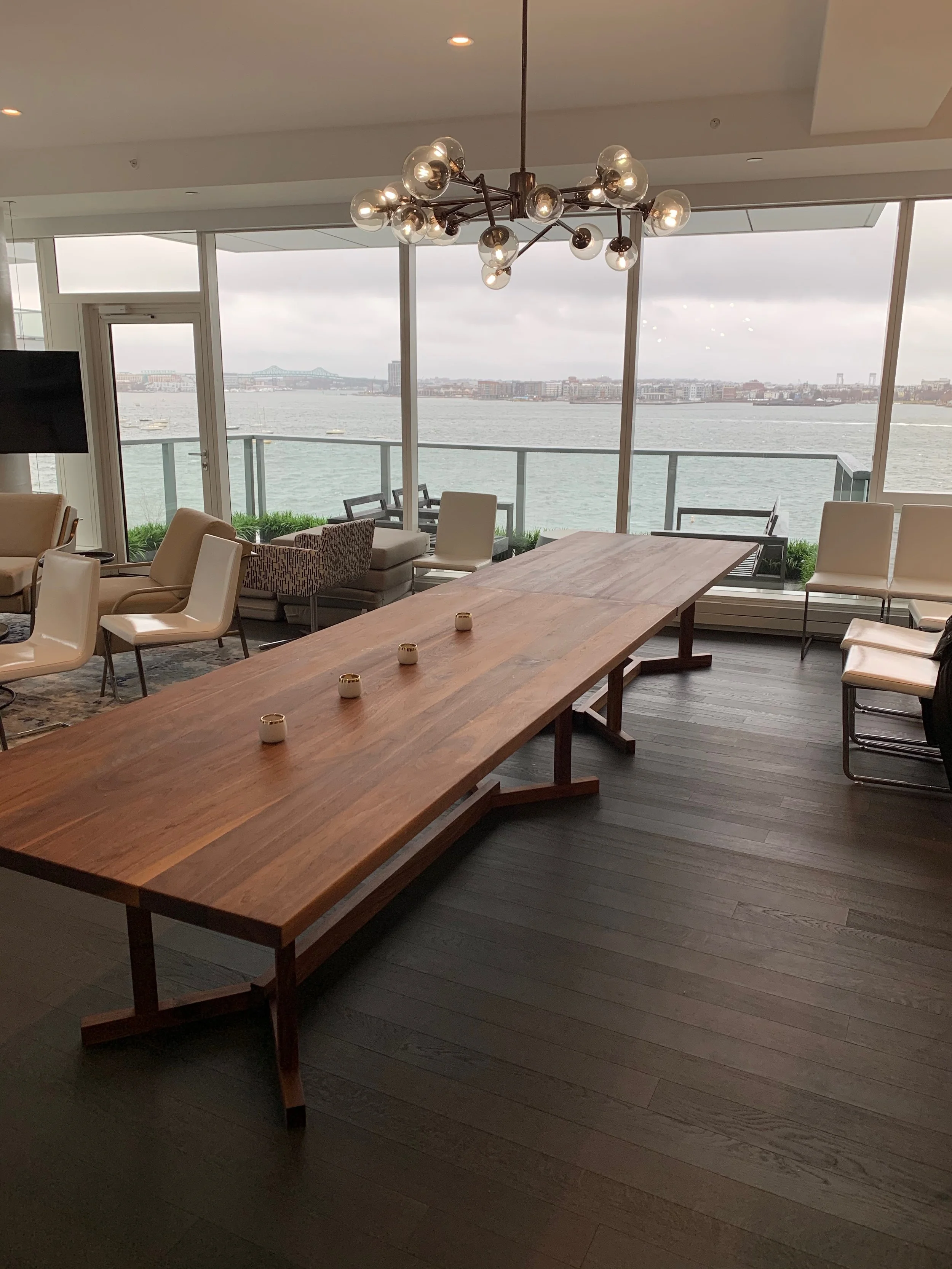
When investing in a dining table, size is everything. Too small and guests feel cramped; too large and your room looks crowded. The good news? With a custom dining table, you’re not stuck with “one-size-fits-all” options—you can design a piece that fits your home and lifestyle perfectly.
In this guide, we’ll walk you through the key factors in choosing the right size dining table, from room measurements to seating capacity, so you can bring home a table that feels tailor-made.
Standard Dining Table Sizes Explained
Before diving into custom options, it helps to understand the most common table sizes:
Rectangular Tables: Usually 36–40 inches wide.
Seats 4: 60 inches long
Seats 6: 72 inches long
Seats 8: 96 inches long
Seats 10–12: 120 inches long
Round Tables: Ideal for smaller spaces and conversation.
42–48 inches: seats 4
54 inches: seats 5–6
72 inches: seats 8
Square Tables: Work best in large, open rooms.
36–44 inches: seats 4
54 inches: seats 8
These measurements are a helpful starting point—but remember, with a custom-built table, you’re not limited by standard dimensions.
What About Table Height?
This is something a lot of people don’t think about until they’re already sitting at a table that’s wrong for them. Standard dining tables are 28–30 inches tall, and that works well with most dining chairs. If you’re going for a more casual, kitchen-island feel, counter-height (bar) tables run 34–36 inches and pair with stools rather than chairs.
Counter-height tables can work well in open-concept spaces where the dining area blends into a kitchen—they feel lighter, less formal, and can double as extra prep space when you need it. Standard height stays the right call for formal dining rooms or anywhere you want a more traditional, settled feel.
Whatever height you choose, the key number to keep in mind is the gap between the seat and the underside of the tabletop—you want 10–12 inches of clearance for comfortable legroom. I can build to any height you need, so if you’re taller than average, have young kids, or just want something that works with stools you already own, we figure that out before a single board gets cut.
How Many People Do You Want to Seat?
Think about your household first, then add in how often you entertain:
Small Family (2–4 people): A 60–72 inch table will be comfortable.
Medium Family (4–6 people): A 72–96 inch table gives flexibility.
Large Family or Frequent Hosts (8+ people): 96–120 inches is ideal.
Rule of thumb: plan for 24 inches of table length per person for comfortable seating.
Measuring Your Room for the Right Fit
One of the biggest mistakes buyers make is choosing a table that’s too large for the room. To get the fit right:
Measure your dining room or dining area.
Subtract 72 inches (6 feet) from the length and width. This leaves 36 inches of clearance on all sides so chairs can slide back easily.
Use painter’s tape or cardboard to outline the footprint of different table sizes—you’ll quickly see what feels comfortable.
Example: If your dining room is 14’ x 12’, the maximum table size would be 8’ x 6’ (96” x 72”).
How Table Shape Affects the Feel of Your Room
Dimensions tell you what fits. Shape tells you how the room feels. They’re two different decisions, and both matter.
Rectangular tables are the workhorse of the dining room—they maximize seating along the sides, and they suit long, narrow rooms naturally. Most of the tables I build are rectangular for exactly that reason.
Round tables change the dynamic entirely. There’s no “head of the table,” which makes conversation flow more easily—everyone’s equidistant, everyone’s included. They work beautifully in square rooms where a rectangle would feel awkward, and they’re often the right answer in a smaller space because the lack of corners makes the room feel less blocked.
Oval tables are a hybrid worth considering. They soften the look of a rectangular footprint while still giving you more seating capacity along the sides than a round table of similar width. If you like the warmth of a round table but need to seat eight, oval is often the answer.
And then there are live edge tables, which play by their own rules. The organic silhouette of a live edge slab doesn’t conform to any of these categories neatly—it can sit in a room that would suit either a rectangular or oval table and feel completely at home in both. I’ve found that in New England homes, live edge tables tend to land in spaces where people want the table to be the focal point of the room—not just a surface, but something you notice.
Benefits of a Custom Dining Table
Most big-box retailers offer a handful of standard sizes. But homes aren’t standard—your table shouldn’t be either. Here’s why custom is worth it:
Tailored Fit: Get exact dimensions for your room.
Personalized Seating: Whether you want seating for 6 or 16, we can design it.
Style Flexibility: Choose round, square, rectangular, or oval.
Unique Materials: From walnut and oak to exotic slabs, every table tells its own story.
At Hope’s Woodshop, every dining table starts with the slab selection at the sawmill, ensuring we can match your space, seating needs, and style perfectly.
Pro Tips for Choosing the Right Table Size
Think about lifestyle, not just looks. If your family eats together nightly, prioritize comfort and space.
Leave room for movement. Especially important in open-concept homes where the dining area blends into other spaces.
Plan for holidays. If you host Thanksgiving or large gatherings, a table with a larger build may be best.
Don’t forget ceiling height. Large tables in rooms with low ceilings can feel heavy—balance proportions with light fixtures.
Consider the table base. A pedestal base gives more legroom underneath and lets you squeeze in an extra chair or two at the holidays. A four-leg base feels more traditional but limits where you can seat people at the corners.
Think about wood species and visual weight. A wide, dark walnut slab “fills” a room more than a lighter maple or white oak table of the exact same dimensions. In a smaller dining room, lighter species make the space feel more open and breathable.
The Most Common Sizing Mistake I See
After building tables for clients across hundreds of dining rooms, I can tell you the most common mistake isn’t going too big—it’s going too small. People worry about the table overwhelming the room, so they pull back on the dimensions. The result is a table that looks lost in the space and forces everyone to crowd together. A table that’s slightly generous for the room almost always feels better than one that’s slightly too modest.
The second most common mistake? Forgetting about the chandelier or pendant light. The center of your table needs to line up with your light fixture—otherwise the whole room feels off-balance. If you’re having a custom table built, it’s worth confirming that placement before you finalize the length.
The other thing I’ve noticed over the years: clients often come in with a size in mind, and somewhere in the process they realize they want it bigger than they originally thought. I see this often enough that I always ask upfront: “What’s the biggest table you’d be comfortable with?” That question tends to free people up to think about what they actually want—not just what they think they can get away with.
Ready to Design Your Perfect Dining Table?
Choosing the right size is just the first step—our team can help you bring it to life with custom slabs, live edge designs, and handcrafted bases that make your dining table one of a kind.
If you’re ready to start designing, head over to our custom dining tables page and tell us about your space. We’ll take it from there.